
Why Do Salt Chlorinators Fail Prematurely? 4 Causes and a Practical Inspection Guide
A salt chlorinator may gradually lose chlorine output, develop excessive scale on its electrolytic cell, or require electrode replacement earlier than expected. For commercial swimming pools, hotels, resorts and SPA facilities, these problems can increase maintenance costs and affect daily operations.
Why does a salt chlorinator fail prematurely? In many cases, the problem is not caused by a single component. Water chemistry, operating conditions, installation quality and equipment design all play a role.
This guide explains the common causes, the key points worth checking, and the questions to ask before purchasing a salt chlorinator.
Four Common Causes of Premature Salt Chlorinator Failure
1. Unbalanced Water Chemistry
High pH and excessive calcium hardness can encourage scale formation on the electrolytic cell. As deposits accumulate, chlorine production may decline and cleaning becomes more frequent.
Salinity outside the manufacturer's recommended range can also affect electrolysis performance and equipment operation.
What to check: Water pH, salt concentration, calcium hardness and the condition of the electrode surface.
2. Excessive Operating Load
A salt chlorinator that operates at high output for extended periods may consume electrode life more quickly, particularly when the unit is undersized for the pool or chlorine demand is consistently high.
Operating settings should reflect pool volume, usage, water temperature and actual chlorine demand rather than relying on maximum output at all times.
What to check: Daily operating hours, chlorine output settings, seasonal demand and whether the unit is correctly sized.
3. Installation and Water Circulation Problems
Unstable flow, blocked filters, incorrect pipework or unsuitable electrical conditions can affect system performance. If the cell operates without adequate water flow, equipment damage may occur unless the appropriate protection is in place.
What to check: Water flow, filter condition, pipe restrictions, electrical supply and the installation of flow or low-water protection where required.
4. Electrode Wear and Inadequate Equipment Protection
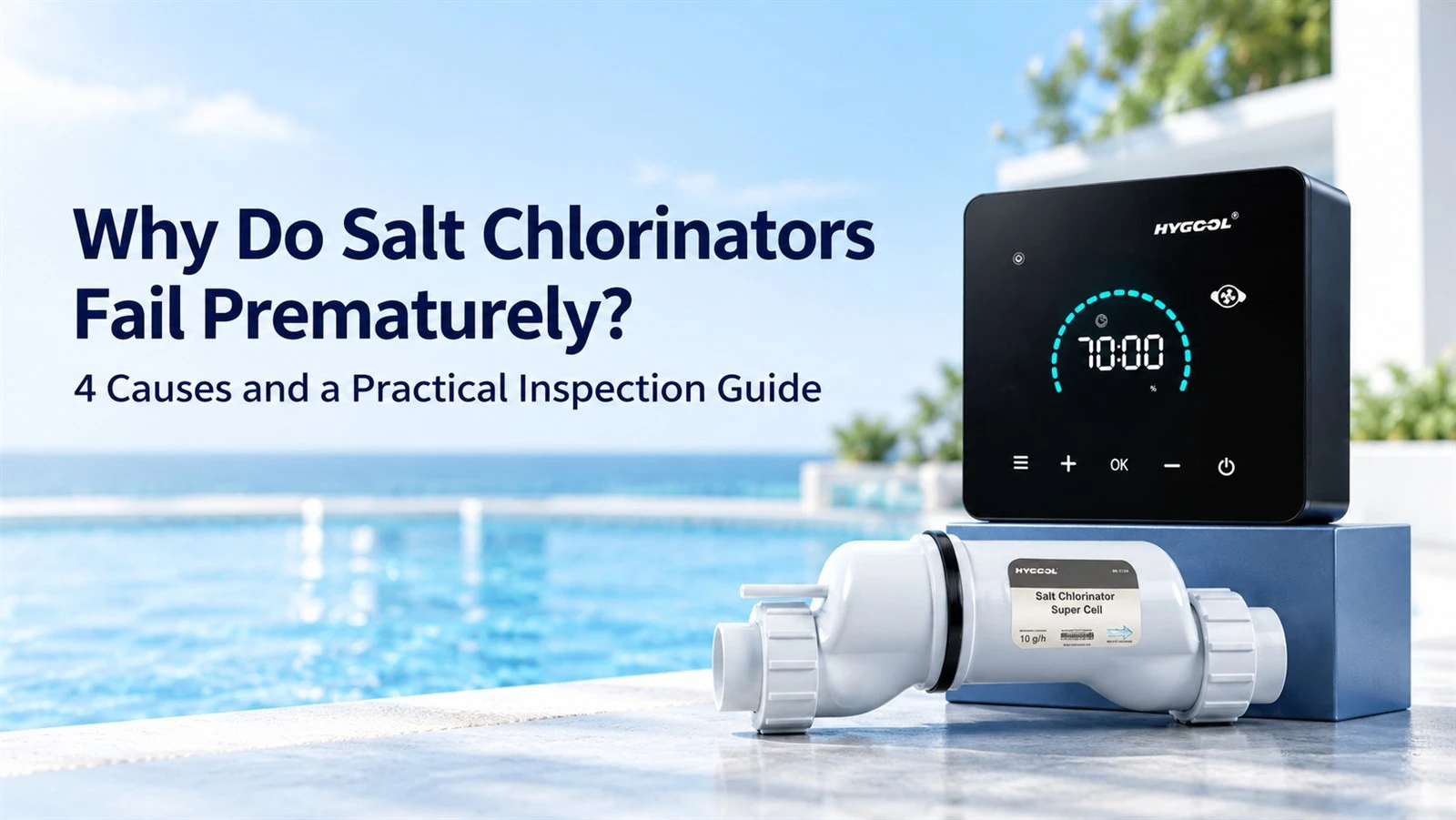
The electrolytic cell is a critical component of a salt chlorinator. Its service life depends on electrode materials, catalytic coating technology, manufacturing quality, operating conditions and maintenance practices.
Inadequate protection against abnormal operating conditions can also increase the risk of equipment damage.
What to check: Electrode condition, coating deterioration, controller alarms and available safety protection functions.
What Should Operators Inspect?
A practical inspection routine can help identify problems before they lead to major repairs.
Water chemistry: Test pH, salinity and calcium hardness regularly. Check total alkalinity when relevant to the water-treatment plan, and follow the equipment manufacturer's operating limits.
Electrolytic cell: Look for scale, visible damage and changes in chlorine output. Clean the cell according to the manufacturer's instructions; avoid unnecessary or excessively aggressive acid cleaning.
Operating data: Review runtime, output settings, alarms and changes in chlorine production. Investigate a sustained decline rather than immediately increasing output.
Circulation and filtration: Check water flow, filter condition, valves and pipework to identify restrictions or abnormal operating conditions.
Electrical and control systems: Inspect connections, controller status and protective functions according to the manufacturer's maintenance procedures.
Inspection frequency should reflect the actual water conditions, operating hours and manufacturer recommendations. Hard-water environments and heavily used commercial pools may require closer monitoring.
Questions to Ask Before Purchasing a Salt Chlorinator
For a new project or equipment replacement, ask the supplier to clarify the following points.
Electrode design
What titanium substrate and catalytic coating technology are used?
What is the expected electrode service life, and under which operating conditions is it specified?
Is technical documentation available for the electrode materials and construction?
System protection
What protection is provided against insufficient water flow and abnormal electrical conditions?
How does the controller respond to operating faults?
Which protection functions are included as standard?
Project compatibility
What pool volume and chlorine demand is the unit designed to support?
What salinity and water-temperature ranges are permitted?
Is the unit suitable for the project's operating schedule and local water conditions?
Maintenance and after-sales support
Are the electrolytic cell and controller replaceable separately?
What are the warranty terms for the complete unit and the electrode cell?
Are installation guidance, troubleshooting support and replacement parts available?
Choose Equipment for the Operating Conditions, Not Just the Initial Price
A salt chlorinator should be evaluated as part of the complete water-treatment system. Correct sizing, stable circulation, appropriate water chemistry and clear maintenance procedures all contribute to reliable operation.
For commercial projects, it is also worth considering equipment with a practical maintenance structure. A modular design can make it easier to replace individual components when the product is engineered to support separate replacement, potentially reducing unnecessary downtime and replacement costs.
At HYGOOL, our salt chlorinator solutions can be discussed around project requirements, equipment configuration and maintenance needs. For project-specific selection, the pool volume, operating schedule, water conditions and required chlorine output should be confirmed before choosing a model.
The key takeaway: Preventing premature failure starts with identifying the actual cause, establishing a consistent inspection routine and selecting equipment suited to the project conditions.